
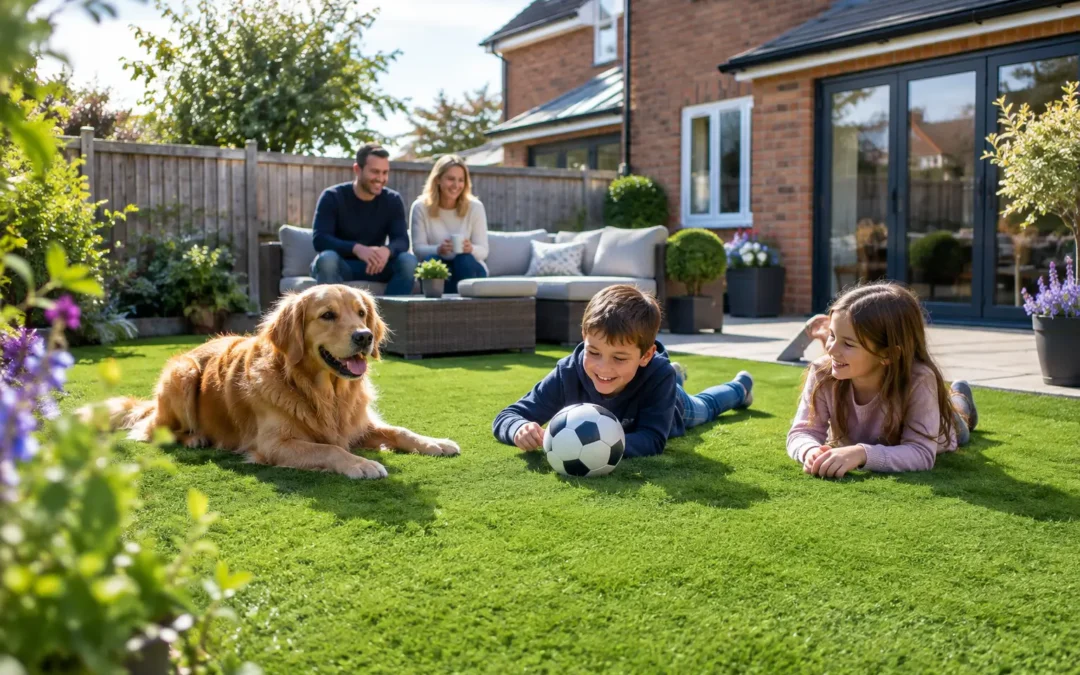
A lawn can look lovely for a few weeks, then become the part of the garden everyone avoids. Mud comes through the back door, shaded corners turn thin and mossy, and a wet spell leaves the grass too soft for children or dogs to use. Fabgrass helps homeowners replace that cycle with a neat, practical artificial lawn that is designed around how the garden is actually used.
Artificial grass is not the right answer for every outdoor area, and it is not completely maintenance-free. However, where natural turf struggles with shade, heavy use, poor drainage or busy family life, a professionally prepared artificial lawn can make the garden far easier to enjoy throughout the year.
What makes a Fabgrass installation different?
The grass you see on top matters, but the work underneath matters just as much. A good-looking lawn can quickly develop dips, movement or drainage problems if it has been laid over unsuitable ground. That is why a proper survey is the sensible place to start.
At Fabgrass, the process begins with a free home visit to measure the area, assess the existing ground and discuss what you need from the garden. Some customers want a soft space for children to play. Others need a hard-wearing lawn for one or more dogs. A garden with an established drainage issue may need a different approach from a dry, level garden that simply will not grow grass beneath trees.
Seeing physical samples at home is useful too. Pile height, colour, softness and density can look very different outside from how they appear in a photograph. The aim is not to steer you towards the most expensive option, but to find a grass that suits the space, expected use and finish you want.
Ground preparation is where a lasting lawn starts
Artificial grass should not normally be treated as a surface that can simply be rolled over an existing lawn. Turf, roots and soft soil can shift and hold water. In many gardens, the existing surface needs to be excavated, with the old turf and waste removed before the new base is built.
The precise preparation depends on the site, but a professional installation commonly includes a weed membrane, a compacted Type 1 roadstone sub-base and suitable finishing layers to create a smooth, stable surface. Levels need careful attention so water is directed appropriately and the lawn sits neatly against paths, patios, borders and fencing.
This is also why quotes can differ from one garden to another. A small, flat area with sound access is very different from a sloping lawn, a garden with limited side access or ground that is already holding water. A clear site survey allows the work to be specified properly rather than making assumptions from photographs alone.
A well-prepared base does not just help the lawn look level on installation day. It supports the grass under everyday footfall, garden furniture, children playing and regular use by pets. Cutting corners beneath the surface is usually the false economy homeowners regret later.
Drainage needs to be considered, not assumed
Most quality artificial grass has a permeable backing, allowing water to pass through it. That alone does not solve a drainage problem. Water still has to move through the base and away from the area effectively.
If your current lawn becomes boggy in winter, mention it at the survey. The cause could be compacted soil, poor falls, a low point in the garden or an issue around nearby paving. The best solution depends on what is happening below ground. Honest advice may include additional groundwork rather than pretending any grass product will fix the problem by itself.
Artificial grass for dogs: practical points that matter
For dog owners, the appeal is straightforward: less mud on paws, fewer muddy floors and a surface that is easier to keep tidy. But the choice of grass and the preparation below it need to reflect the number, size and habits of your dogs.
A lively large dog, or several dogs using a small lawn every day, creates more wear than an occasional pet on a generous garden. A durable, practical grass is often a better choice than a very long, ornamental pile that may flatten more easily in busy areas. During a visit, it is worth discussing where your dog tends to run, dig, toilet and wait by the gate.
Solid waste should be picked up promptly, just as it would be on natural grass. Regular rinsing with water helps keep the surface fresh, particularly in dry weather. Pet-safe cleaning products can be useful when needed, but no surface can honestly be described as completely odour-free without sensible cleaning and adequate drainage.
The base is especially important for dog gardens. Urine needs a route to drain through the grass and prepared layers below, rather than lingering near the surface. With the right grass, proper preparation and routine care, artificial grass can be a very workable option for many dog-owning households.
A lawn for children, visitors and everyday living
Families often choose artificial grass because they want a garden that can be used without waiting for the lawn to recover. It provides an even, green-looking surface for everyday play and makes a useful link between a patio and the rest of the garden.
That said, it should be treated as one part of the garden rather than a replacement for every type of outdoor surface. Patios are better for dining furniture and barbecues, while planted borders bring seasonal colour and character. In some gardens, combining artificial grass with porcelain paving creates a practical layout: a clean seating area close to the house and a softer lawn area beyond it.
Think about the details before installation. Where will the lawn meet existing paving? Do you need access to sheds, drains or gates? Will a trampoline, football goal or garden furniture sit in one place for long periods? Raising these points early helps create a tidy finish and avoids awkward adjustments later.
The maintenance is low, not non-existent
One of the main benefits of artificial grass is no regular mowing, feeding or reseeding. It will not need the weekly attention that natural turf demands during the growing season. But a little care helps it continue to look its best.
Leaves, twigs and general debris should be removed, particularly in autumn. Brushing the pile occasionally can lift areas that receive frequent foot traffic, and rinsing is helpful for pet gardens or after dusty weather. Any spills should be dealt with reasonably quickly. The routine is simple, but it is still part of owning the lawn.
It is also sensible to keep sharp heat sources away from the surface. Barbecues, fire pits and very hot items need a paved area rather than being placed directly on artificial grass. Reflections from certain windows or glass doors can create concentrated heat in some gardens, so this is worth discussing if you have noticed strong glare in one spot.
Choosing the right artificial grass for your garden
There is no single best pile height or colour for every home. A shorter, denser grass can suit high-traffic spaces and dog owners who prioritise practicality. A fuller pile may appeal where the lawn is mainly for appearance and lighter use. The right choice comes down to the garden, the household and what you expect from it.
A free survey gives you the chance to ask direct questions, compare samples in your own light and understand what the quote includes. For homeowners in Nottinghamshire and Derbyshire, Fabgrass brings the experience of specialist domestic installations rather than a one-size-fits-all approach.
If your lawn is costing more time and effort than enjoyment, start by looking at the ground as well as the grass. A measured conversation, a proper assessment and the right preparation can make the difference between a surface that merely looks good at first and a garden that works for your family day after day.

