
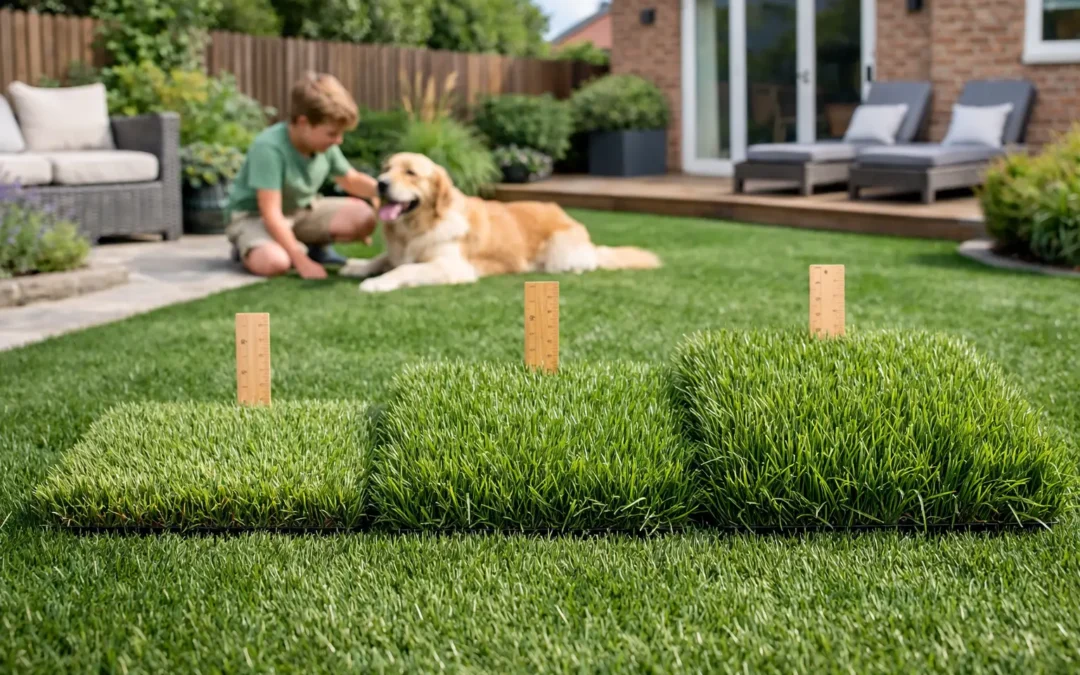
A 40mm lawn can look wonderfully soft in a sample, but that does not automatically make it the right choice for a busy garden. This artificial grass pile height guide explains what the measurement really means, how it affects the look and feel of your lawn, and how to choose a practical option for your household.
Pile height is one part of the decision, alongside the density, yarn shape, backing and, crucially, the preparation beneath the grass. The best choice is usually the one that suits how your garden is used, rather than simply the longest pile available.
What does artificial grass pile height mean?
Pile height is the length of the artificial fibres, measured from the backing to the tip of the blade. A product described as 30mm therefore has fibres around 30mm long when standing upright.
It is an easy figure to compare, but it does not tell the full story about quality. Two lawns with the same pile height can feel and perform quite differently. A dense 30mm grass with a good yarn structure may look fuller than a less dense 35mm product. The colour blend also affects how natural it appears, while the backing and installation affect how well it sits and drains in the garden.
When viewing samples, run your hand across the fibres, look at the colour in daylight and stand back to see the overall finish. This gives a much better impression than choosing from a pile-height number alone.
Artificial grass pile height guide by garden use
For most domestic gardens, a pile height between 30mm and 40mm is a sensible starting point. It offers a natural-looking lawn without being unnecessarily difficult to brush or keep tidy. The right point in that range depends on the people, pets and activities using it.
Short pile grass: around 20mm to 30mm
Shorter-pile artificial grass has a neat, close-cut appearance. It is often a good fit for compact gardens, front lawns, pathways, balconies and areas that receive regular footfall. The fibres have less length to flatten, so the surface can be easier to brush back into shape after use.
It may also suit homeowners who prefer the look of a freshly mown lawn rather than a deep, lush finish. The trade-off is that it does not feel as soft or luxurious underfoot as a longer pile, particularly when children are sitting or playing on it.
For dogs, a well-made shorter or mid-pile grass can be very practical. Solid waste is easier to spot and remove, and the surface is usually straightforward to rinse. However, the drainage design beneath it matters far more than the pile height when dealing with urine and wet weather.
Mid-pile grass: around 30mm to 35mm
A 30mm to 35mm pile is one of the most versatile choices for family gardens. It has enough depth to feel comfortable underfoot and soften the look of the garden, while remaining resilient for children, pets and everyday use.
If your lawn is used for a kickabout, garden furniture, paddling pools or regular trips in and out of the house, this is often the most balanced option. It is also a strong choice for gardens where natural turf has struggled with shade, moss or worn patches by the back door.
For many dog-owning households, this range provides a good combination of appearance and practicality. It should still be brushed occasionally and cleaned when needed, but it is less likely to look flattened than a very long pile in a heavily used area.
Longer pile grass: around 35mm to 40mm and above
Longer pile products create the fuller, softer lawn that many homeowners have in mind when they choose artificial grass. They can look particularly attractive in a garden used mainly for relaxing, entertaining and enjoying from the patio.
A 38mm or 40mm pile can work well for families too, provided the grass is good quality and the area is not receiving constant heavy wear in one spot. It is worth remembering that longer fibres naturally move and flatten more than shorter ones. They may need brushing more regularly, especially beneath furniture, around goalposts or where dogs follow the same route across the lawn.
Very long pile is not always the most practical option for a busy household. If you have several large dogs or energetic children using the lawn every day, a slightly shorter, denser product may keep its neat appearance with less upkeep.
Why density matters as much as pile height
Pile height gets the attention because it is simple to understand, but density has a major effect on the finished lawn. Density refers to how closely packed the fibres are. A denser grass tends to look fuller and offers more support to the blades, helping them stand up after use.
This is why it is sensible to compare physical samples side by side. A long, sparse product can look flat once installed, while a well-made mid-pile grass can look rich and natural. The best samples should not just look good in a showroom or photograph. They should feel suitable for your garden and the way you live.
The yarn shape also plays a part. Some fibres are designed to spring back more effectively, while a mix of green tones and a brown or green thatch layer can make the lawn look less uniform. There is no single best specification for every garden, which is why seeing several samples at home is useful.
Choosing a pile height for dogs and children
For gardens with dogs, it is tempting to focus entirely on the grass itself. In practice, the ground preparation is equally important. Artificial grass needs a stable, correctly prepared base and a drainage approach suited to the condition of the garden. Without that, even an expensive product may not perform as it should in wet weather.
For one small or medium dog, many 30mm to 35mm grasses are a sensible choice. For multiple dogs, larger breeds or a garden that gets very muddy in winter, durability, drainage and a surface that is easy to clean should take priority over a very soft, long pile. Remove solid waste promptly, rinse areas when required and use a suitable artificial grass cleaner if odours become a concern.
For children, a 30mm to 40mm pile generally provides a comfortable lawn for play. It will not replace proper safety surfacing for climbing equipment or high-impact play areas, but it can give families a cleaner space for ordinary garden use. A professional installer can also advise on practical details such as edges, levels and how the lawn meets patios or paths.
Do not overlook preparation and drainage
The grass you see on top is only as good as the work beneath it. A level, long-lasting lawn depends on removing unsuitable existing material where required, creating the correct levels, fitting a weed membrane and building a properly compacted sub-base. This supports the lawn and helps manage water rather than leaving it sitting on the surface.
Gardens across Nottinghamshire and Derbyshire vary greatly. One may have heavy ground, another may slope towards the house, and another may hold water because of old patio levels or compacted soil. These are not issues that can be judged properly from a product photo or a quick online order.
A site survey should look at access, drainage, current levels and how the garden will be used. It is also the opportunity to discuss whether a shorter, tougher grass or a softer, fuller option is the better fit. Good advice may mean recommending a less expensive pile height where it is genuinely more practical.
How to make your final choice
Start with the look you prefer, then bring the decision back to everyday use. A quiet garden used mostly for sitting out can accommodate a softer, longer pile. A family lawn with dogs, footballs and regular traffic often benefits from a hard-wearing 30mm to 35mm product with a dense construction.
Ask to see samples outside your own home, where the light and surrounding materials are different from a showroom. Place them beside your paving, fencing and planting. Walk on them in shoes and barefoot if possible. The product that looks right in your garden and feels manageable for your household is usually the right one.
At Fabgrass, we bring samples to the home and talk through the practical details before recommending a lawn. If you are unsure whether 30mm, 35mm or 40mm will suit your garden, a free survey and straightforward advice can make the choice much easier.

