
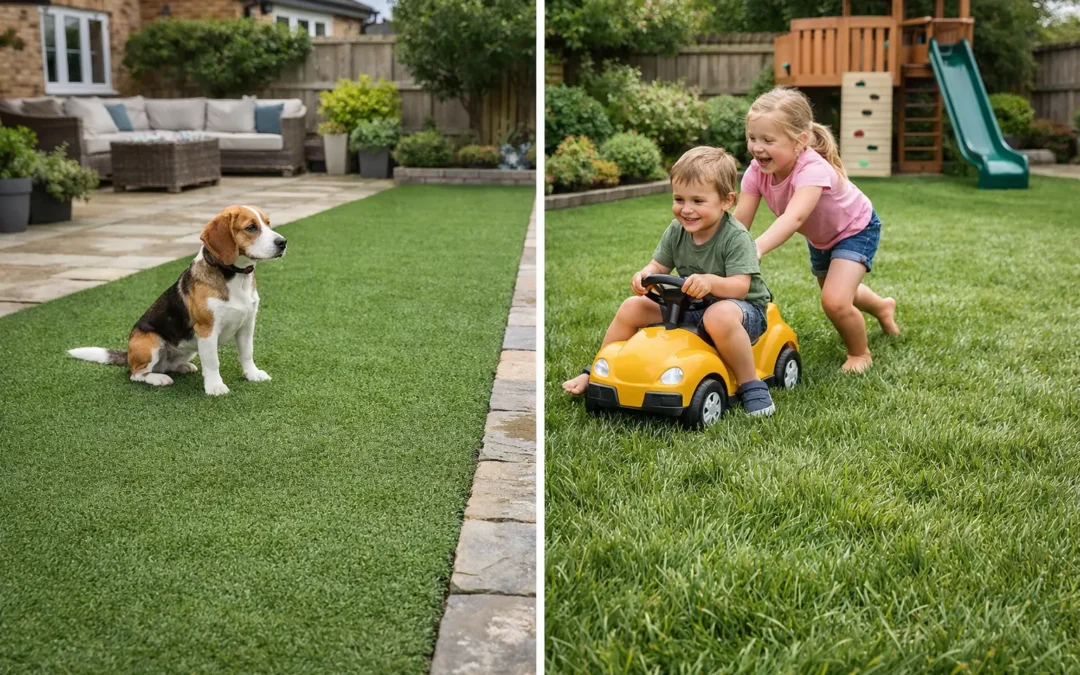
A grass sample can look very different once it is laid across a whole garden. That is why the choice between short pile versus long pile artificial grass is about much more than picking the softest option in your hand. Pile height affects the finished look, how the lawn feels underfoot, how well it copes with dogs and children, and how much brushing it may need to stay looking its best.
For some homes, a neat short-pile lawn is the practical answer to muddy feet and a worn natural lawn. For others, a fuller long-pile grass gives the softer, more luxurious finish they want around a patio or seating area. The right answer depends on how your garden is used, as well as the quality of the grass and the preparation beneath it.
What does pile height mean?
Pile height is simply the length of the artificial grass fibres, measured from the backing to the tip. Short-pile products are commonly around 20mm to 30mm. Mid-length grasses tend to sit around 30mm to 35mm, while long-pile options are often 35mm to 45mm or more.
Height alone does not tell the full story. Fibre shape, stitch rate, backing, yarn quality and the density of the product all influence how the grass looks and performs. A well-made 30mm grass can feel fuller and wear better than a cheaper product with a much longer pile.
It is also worth remembering that artificial grass does not need to copy an overgrown natural lawn to look convincing. In many domestic gardens, a natural-looking, well-supported mid-pile grass is often the most balanced choice.
Short pile versus long pile artificial grass
The most visible difference is appearance. Short-pile grass has a tidy, freshly cut look. Its blades stand more upright, so it often suits small gardens, paths, side areas and spaces where a smart, clean finish matters most. It can also make a compact garden feel less busy.
Long-pile grass looks fuller and more cushioned. It can create a softer lawn effect, particularly in a larger garden with borders, paving and outdoor furniture around it. Many homeowners prefer this appearance when the lawn is mainly for relaxing, children playing or enjoying the garden with family.
Neither is automatically better. A long pile can look superb, but very long fibres may flatten in the routes people use most. A short pile can be highly practical, but may not give the soft, dense feel some people expect from an artificial lawn. Looking at full samples outside, rather than choosing from a photograph, makes a real difference.
Short pile: practical and neat
Short pile is a sensible choice for gardens that get regular use. It is generally easier to brush back into shape because there is less fibre to lift. Leaves and surface debris are also straightforward to remove with a blower, soft brush or plastic rake.
It works particularly well for busy access areas, narrow gardens and homes where the priority is reducing lawn jobs without creating a thick, springy surface. If children are running in and out, or a dog has a favourite route to the back gate, a good-quality shorter grass can keep a neat appearance.
The trade-off is comfort. It will not usually feel as soft or lush as a denser 35mm or 40mm product. For a family wanting a lawn to sit and play on for long periods, a very short pile may feel more functional than luxurious.
Long pile: softer and fuller
Long pile gives more visible depth and a more cushioned feel underfoot. It is popular for gardens where the lawn is intended to be a focal point, rather than simply a surface to walk across. A higher-quality long-pile product can look particularly effective beside porcelain paving or a well-kept patio.
However, longer fibres need suitable support from the product design and the correct installation. In high-use areas, the pile may need occasional brushing to lift the fibres and redistribute infill where used. This is normal maintenance, not a fault with the grass.
Long pile is also not always the best choice for a garden with several large, active dogs. It can still work well, but the grass needs to be chosen carefully, and correct drainage becomes far more important than pile height alone.
Which pile height is best for dogs?
Dog owners usually want the same three things: less mud through the house, easy waste removal and a surface that drains properly. A shorter or mid-pile artificial grass is often a practical starting point because it is easier to clear and brush. It can be a good option where one or more dogs use the garden every day.
That said, there is no one pile height that suits every dog garden. A small dog using part of a lawn is very different from two large dogs using the whole garden as their main exercise area. The number and size of dogs, how often they are outside, the existing ground conditions and whether urine tends to concentrate in one spot should all be considered.
For dog-friendly installations, the work below the grass matters most. Water and urine need a clear route away through the grass and into a properly prepared base. If drainage is poor, choosing a shorter pile will not solve the underlying problem. Regularly picking up solid waste, rinsing areas as needed and using a suitable artificial grass cleaner can help keep the lawn fresh.
Children, family use and high-traffic gardens
For families, a mid- to long-pile lawn often offers the nicest balance of softness and everyday practicality. Children can play outside without the patches of mud that follow wet weather, while parents are not faced with mowing and reseeding worn areas.
If the lawn will be used constantly for football, garden games or repeated trips between the house and a trampoline, consider where the heaviest traffic will fall. A dense, resilient product is usually more useful than simply choosing the tallest pile. A grass that feels great in a sample but flattens quickly in the busiest area is unlikely to be the right fit.
In shaded gardens around Nottinghamshire and Derbyshire, artificial grass can also avoid the common problems of thin turf, moss and bare patches. The pile height is still a personal choice, but a clean, level base and good edging are what give the finished lawn its neat appearance.
Do not overlook ground preparation and drainage
A good artificial lawn is built from the ground up. The grass you see is important, but it needs a stable, free-draining foundation beneath it. Uneven or poorly prepared ground can lead to dips, movement and standing water, regardless of whether the pile is short or long.
Professional preparation may involve removing existing turf and waste, excavating to the right depth, installing a weed membrane, laying and compacting a Type 1 roadstone sub-base, then adding suitable finishing layers before the grass is fitted. The exact build-up depends on the site, soil, levels and drainage requirements.
This is especially relevant where a natural lawn has struggled with puddles. Artificial grass should not simply cover a drainage problem. During a site survey, it is worth discussing where water currently sits, whether the garden slopes towards the house and how the lawn will be used throughout the year.
How to make the right choice
Start with your normal routine, not just the look you like online. If you want a low, crisp lawn around a practical family space, short pile may be ideal. If you picture bare feet, outdoor seating and a fuller lawn finish, a quality mid- or long-pile grass may suit you better.
Ask to see samples in your own garden. Look at them in daylight, place them beside your paving or fencing, and feel them underfoot. It is the easiest way to judge colour, softness and how the pile sits from different angles.
At Fabgrass, we use the home visit to talk through those practical details before recommending a grass. A free survey allows us to measure properly, assess the existing ground and help you compare options that suit your garden, your budget and the people or pets using it.
A good artificial lawn should feel right for everyday life, whether that means a tidy short pile outside the back door or a softer long pile for a busy family garden. Choose the product with the use of the space in mind, and give equal attention to the preparation underneath.

