
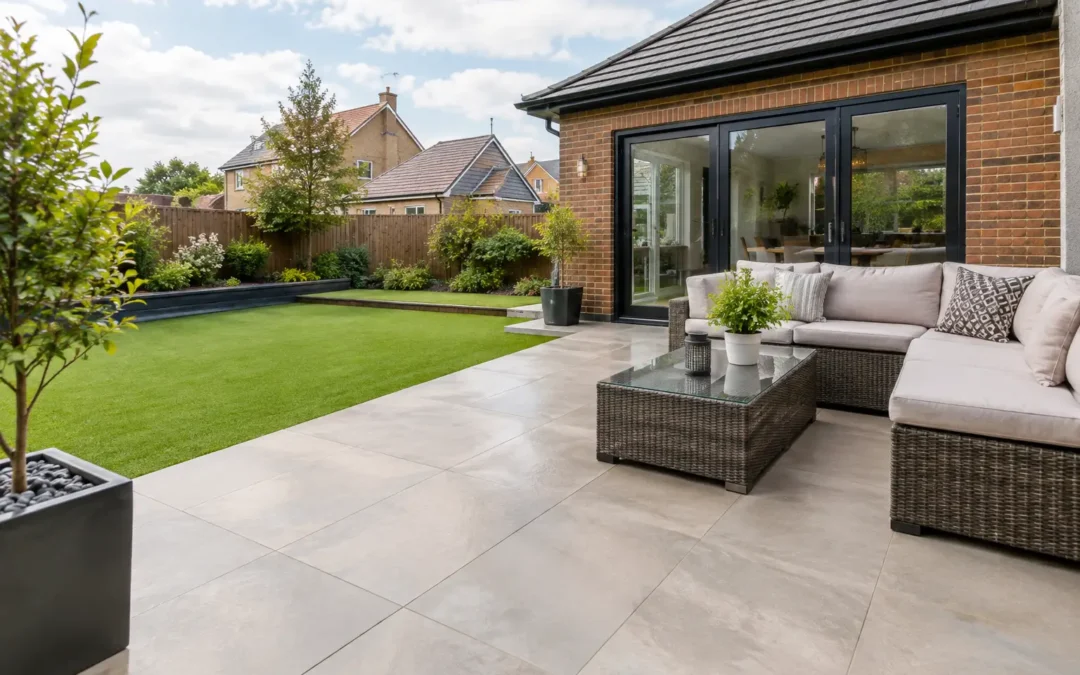
A porcelain patio can make a garden far easier to use, particularly where a muddy lawn, uneven paving or a tired old patio is stopping you enjoying the space. However, porcelain patio costs are not simply a matter of choosing a tile and multiplying it by the area. The preparation beneath the surface often has as much effect on the final price as the paving itself.
For homeowners in Nottinghamshire and Derbyshire, the most useful starting point is to look at what a quote includes. A lower figure can look appealing until excavation, waste removal, drainage or edging are added later. A clear, site-specific quotation gives you a much better picture of what your patio will actually cost and how it will perform over time.
Typical porcelain patio costs
As a broad guide, a professionally installed porcelain patio may cost from around £100 to £180 or more per square metre, depending on the tile selected and the amount of groundwork required. Small patios can work out at a higher cost per square metre because there are fixed costs for labour, delivery, cutting, preparation and clearing waste.
For example, a straightforward 20 square metre patio with good access and a firm existing base will usually cost less than the same-sized area that needs an old concrete patio broken out, soil removed and new drainage installed. Likewise, large-format tiles or detailed patterns require more careful cutting and laying time.
These figures are useful for initial budgeting, but they are not a replacement for a visit and measurement. Every garden has its own levels, soil conditions, access points and practical requirements. The right quote should explain the work involved in plain English rather than giving you one unexplained total.
What is included in a properly laid porcelain patio?
A patio is only as good as the ground beneath it. Porcelain is a dense, hard-wearing material, but it needs a stable, well-prepared base to avoid movement, rocking tiles or water sitting where it should not.
A professional installation will normally include lifting and removing existing turf, paving or unsuitable material where needed, excavating to the correct depth, and removing waste from site. The area is then built up with a compacted sub-base, followed by suitable bedding materials and the correct adhesive or slurry primer to help the porcelain bond properly.
The finished patio should be laid to planned falls so rainwater drains away sensibly. Jointing, edge details and cuts around steps, manholes or garden features are also part of the job. These details are not always the most visible part of the project, but they affect both the appearance and the long-term result.
When comparing porcelain patio costs, ask whether the price includes excavation, sub-base materials, waste disposal, cutting, pointing and edging. If any of these are excluded, you need to know that before work begins.
The factors that change the price
The porcelain tile you choose
Porcelain paving comes in a wide range of colours, finishes, sizes and thicknesses. A simple, popular 600 x 600mm tile will generally be more affordable than a premium stone-effect tile, a large-format plank design or a patio with several colours and laying patterns.
Tile choice is not only about appearance. A textured, slip-resistant finish is often a sensible option around garden doors, children’s play areas and spaces that get regular use in wet weather. It is worth looking at physical samples outdoors where possible, as the colour can look very different in natural light than it does on a screen.
Ground conditions and existing surfaces
Soft ground, uneven levels, old paving and poor drainage all add work. If a garden slopes towards the house, for instance, the patio may need careful regrading or drainage measures so surface water is directed away from the property.
Removing an existing concrete base can also affect the quote. Sometimes an old base is sound enough to work with, but this can only be assessed on site. In other cases, it needs breaking out and replacing to create the correct depth and falls for the new patio.
Size, shape and cuts
A square or rectangular patio is normally quicker to lay than one with curved edges, steps, multiple levels or lots of corners. Porcelain is cut with specialist equipment, and every cut takes time and care. Features such as retaining edges, planters, sleeper borders and drainage channels can make a patio more useful and attractive, but they should be allowed for in the budget.
Access to the garden
A wide side gate and straightforward route to the work area make moving materials easier. A terraced property with narrow access, steps or no rear access may require more manual handling and longer installation time.
This is one reason a home survey matters. It allows the installer to see how materials will be brought in, where waste can be stored safely and whether there are any practical issues before the project starts.
Drainage and levels
Drainage is one of the most important parts of a patio, especially in gardens that already struggle with standing water. The paving needs a gentle fall, but the direction of that fall must work with the rest of the garden and the property.
Where necessary, a drainage channel or soakaway arrangement may be considered as part of the design. This can increase the initial cost, but dealing with water properly is preferable to creating a patio that channels rain towards the house or leaves puddles by the door.
Is porcelain worth the extra cost?
Porcelain often costs more to buy and install than basic concrete paving, partly because the tiles require careful handling, cutting and bonding. For many homeowners, the appeal is its clean finish, wide choice of styles and low-porosity surface, which can make routine cleaning more straightforward than with some more absorbent paving materials.
It is not automatically the right choice for every garden. If the budget is tight, a smaller porcelain patio in the main seating area may be a better use of money than covering every available square metre. You can then use a different surface elsewhere, such as artificial grass for the lawn area.
This combination works particularly well for family gardens and homes with dogs. A porcelain area gives you a firm, practical space for outdoor furniture, while professionally prepared artificial grass can reduce mud around the lawn. The key is planning the levels and drainage together, rather than treating each area as a separate job.
How to keep your patio project on budget
The simplest way to control the cost is to decide early what the patio needs to do. A dining area outside the back door may need room for a table, chairs and a clear route into the garden. A small coffee-and-seating area needs less space. Marking out the proposed shape with string or a hosepipe can help you picture the size before choosing tiles.
Keeping to a straightforward shape, choosing a readily available tile size and avoiding unnecessary level changes can all help. It is also sensible to leave a little room in the budget for issues uncovered once old paving or turf is removed, especially in an older garden where previous work is unknown.
Do not choose solely on the lowest price. Ask what base is being installed, how drainage will be handled and who is responsible for removing waste. Those answers tell you far more about the likely quality of the finished patio than a headline figure alone.
Getting a useful porcelain patio quote
A good quotation should follow a proper survey, not just a rough measurement sent by message. During a visit, the installer can measure the area, discuss tile samples, check levels and access, and talk through how the patio will work alongside your lawn, borders or artificial grass.
At Fabgrass, we take this practical approach because groundwork matters whether we are installing paving or artificial grass. The aim is to recommend a layout and preparation method that suits the garden, rather than adding work that is not needed.
If you are considering porcelain paving, start with the area you use most and be clear about drainage, access and how you want the garden to work day to day. A free home visit and clear quotation will give you a firmer answer than a generic online price, and help you choose a patio that feels right for your home.

