
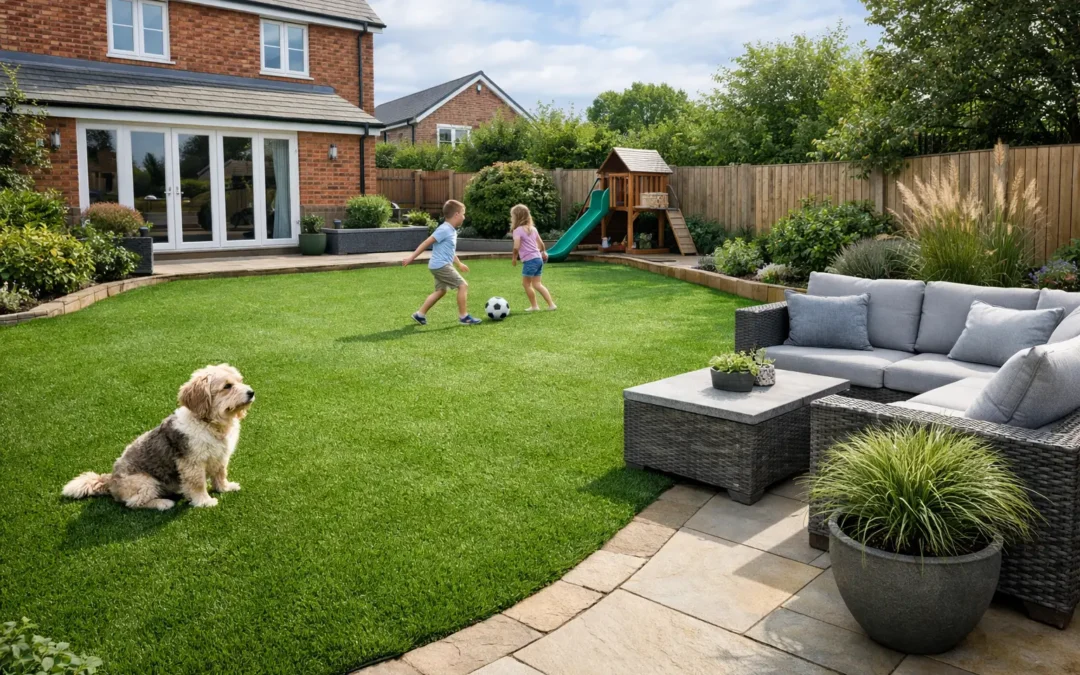
When homeowners ask us for a maintenance free garden with Artificial Grass, they usually mean a garden that stays neat without the weekly mowing, regular weeding and constant battle with mud. Artificial grass can get you very close to that goal, but it is best thought of as low maintenance rather than no maintenance at all. A little care keeps it looking tidy, while the right installation removes many of the problems that make a natural lawn hard work.
For busy families, dog owners and anyone tired of seeing bare patches after a wet winter, it can make the garden far easier to use throughout the year.
What a low-maintenance garden really looks like
The biggest change is simple: there is no lawn to mow, feed, seed or water through dry spells. Artificial grass does not become patchy in shaded corners in the same way natural turf can, and weeds are far less likely to come through when a proper weed membrane and prepared base are used.
That does not mean every part of the garden should be artificial grass. A practical low-maintenance garden often combines a neat lawn with paved seating, borders containing hardy planting, and clear edges that are easy to sweep. The right balance depends on how you use the space. A family may want a larger soft play area, while a couple who enjoy eating outdoors may prefer more patio and a smaller lawn.
Artificial grass is especially useful where natural lawns regularly struggle. Gardens with poor drainage, heavy shade, moss, worn pathways or repeated muddy areas can be difficult to keep presentable. Replacing the lawn with a well-installed artificial surface gives the garden a consistent appearance and a usable area when the weather is not on your side.
Artificial grass preparation matters more than most people expect
A tidy lawn starts below the surface. Placing artificial grass directly over uneven soil or old turf is likely to lead to dips, poor drainage and an unsatisfactory finish. It may look acceptable at first, but it is not the way to create a lawn that will cope with normal family use.
Professional installation normally involves removing the existing turf and waste where needed, excavating to the correct level, and building a firm, free-draining base. At Fabgrass, this includes a compacted Type 1 roadstone sub-base, suitable finishing layers and a weed membrane before the grass is fitted. The details vary from garden to garden, particularly where access, slopes or existing drainage need consideration.
This preparation is particularly valuable in Nottinghamshire and Derbyshire gardens with clay ground or areas that hold water after rain. Artificial grass itself does not solve every drainage issue. Water needs somewhere to go, so the base and the condition of the surrounding ground must be assessed properly at the survey stage.
Choosing grass for children, pets and everyday use
There is no single best artificial grass for every household. Pile height, density and feel all affect how a lawn looks and performs. A very soft, lush product may suit a lightly used front garden, whereas a durable option can be more practical for children playing football or dogs running the same route around the lawn.
For dog owners, drainage and hygiene should be part of the decision from the beginning. Solid waste should be picked up promptly, and the area should be rinsed regularly with clean water, particularly in warmer weather. Brushing the fibres occasionally helps lift flattened areas and clears leaves or general debris.
If several dogs use a small garden, or a dog regularly urinates in one spot, speak openly about it during the consultation. The appropriate grass and ground preparation can be recommended for the level of use. While artificial grass can greatly reduce muddy paws and make waste easier to remove, no surface is entirely free from cleaning requirements.
Small jobs that keep the garden looking its best
Most homeowners find the routine straightforward. Remove leaves before they build up, brush high-traffic areas when the pile starts to lie flat, and rinse the surface when needed. A gentle clean after a messy play session or pet use is usually quicker than repairing a churned-up natural lawn.
It is also worth keeping nearby planting under control. Soil and loose bark can be carried onto the lawn, while overhanging shrubs drop leaves and seeds. Well-defined borders, edging and a sensible planting scheme make the whole garden easier to manage.
Avoid using sharp tools on the surface and do not place a barbecue directly on it. If you are adding garden furniture, choose stable feet so pressure is spread evenly and move items from time to time if you want to avoid permanent flattening in one place.
A better starting point than choosing from a photo
Colour and pile height can look very different in a real garden from how they appear online or in a brochure. Seeing samples at home lets you compare shades against your paving, fencing and brickwork, and judge what feels right underfoot.
A site survey also gives you a clearer answer on levels, drainage and preparation than a rough measurement can provide. That is the point where an experienced installer can advise whether artificial grass is suitable for the whole lawn, a problem corner, or part of a wider patio and landscaping plan.
If your garden has become another weekend job, a properly prepared artificial lawn can give you back a clean, level space for family life, pets and time outdoors. A free home visit and a few samples are often the easiest way to work out what will suit your garden best.

