
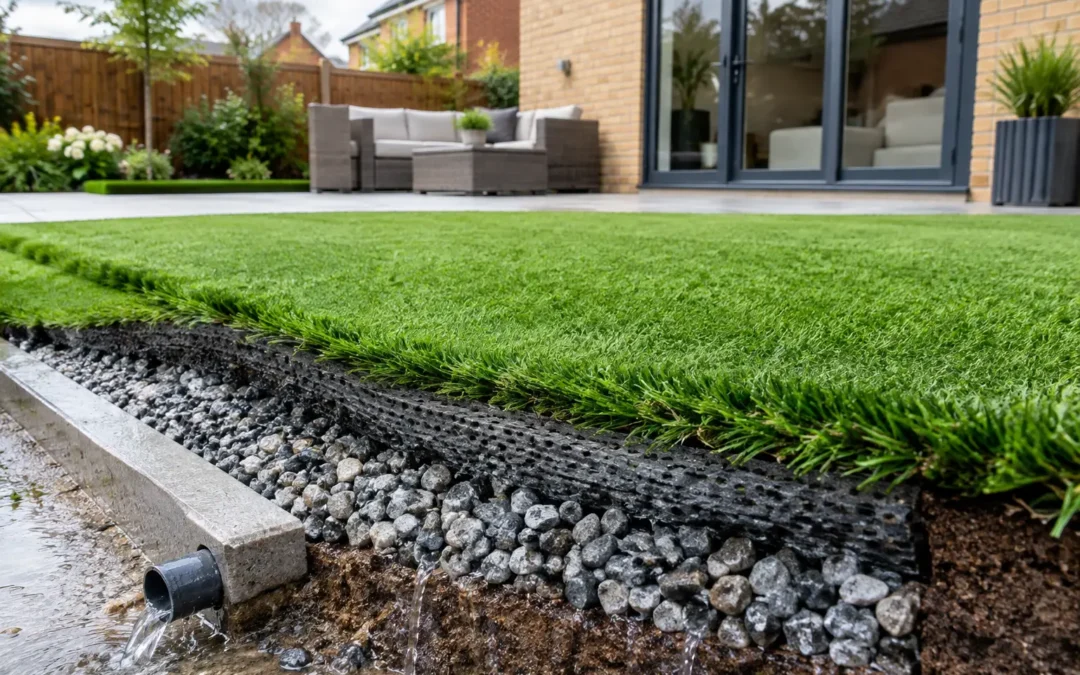
A garden can look neat when the rain stops, yet still hold water underneath. That is why homeowners often ask, is artificial grass permeable? The short answer is yes, most good-quality artificial grass allows water to pass through it. But the grass itself is only one part of the drainage picture. The preparation beneath it makes the real difference between a lawn that dries well and one that develops puddles, damp patches or unpleasant smells.
For gardens across Nottinghamshire and Derbyshire, where heavy rain and clay soil are common concerns, it pays to look at the whole installation rather than just the surface.
Is artificial grass permeable?
Most artificial grass is made with a perforated backing. These small drainage holes allow rainwater, hose water and dog urine to pass through the fibres and backing instead of sitting on top. The drainage rate varies by product, so it is worth choosing a grass designed for the way your garden will be used.
A lawn used by a family, for example, may need a different pile height and feel from one used daily by two large dogs. A denser, more luxurious-looking grass can still drain well, but the backing specification matters. This is one reason why seeing samples before choosing is useful: it helps you compare the look and feel while discussing practical points such as drainage, traffic and pets.
Permeable artificial grass does not mean water disappears instantly in every garden. It means water can get through the grass. It then needs a properly prepared, free-draining base and somewhere suitable to go.
Why the base beneath artificial grass matters most
Think of the artificial grass as the top layer of a drainage system. If the layers beneath it are poorly prepared, water can be held up below the surface even when the grass backing has plenty of drainage holes.
A professional installation normally starts by removing the existing turf and excavating to the required depth. The ground is then prepared with a stable, compacted Type 1 roadstone sub-base, along with suitable finishing layers to create a smooth, level surface. A permeable weed membrane is also used in the correct position to help separate layers and reduce weed growth without blocking drainage.
The exact build-up should be based on the garden. Ground that is already firm and free-draining may need a different approach from a garden with heavy clay, a history of standing water or a low point where rain naturally collects. In some cases, it may be sensible to improve drainage or create a gentle fall before the grass is fitted.
Compaction is important, but it needs to be done correctly. The base must be stable enough to prevent dips developing over time while still allowing water to move through the layers. A garden that looks level on installation day is not much use if it later settles and sends water towards the house or leaves a permanent wet patch near the fence.
What happens when artificial grass is laid over poor drainage?
Artificial grass can hide a drainage problem for a while, particularly during dry weather. The warning signs often appear after sustained rain: water pooling on the lawn, soft areas underfoot, water collecting around the edges or a musty smell coming from damp material beneath the grass.
Simply placing artificial grass over existing natural turf is not the answer. Old turf, soil and uneven ground can retain moisture, break down and create an unstable surface. The grass may then feel spongy, show ripples or develop low spots where water settles.
This is also why a quick quote based only on photographs can be misleading. A proper site survey allows an installer to assess access, levels, existing drainage, soil conditions and where surface water is likely to travel. It is the practical detail that protects the finished result.
Clay soil and low-lying gardens
Many local gardens have clay-heavy soil. Clay drains slowly, especially after weeks of rain, and this can affect any lawn surface. A well-built artificial grass base helps rainwater move away from the top, but it cannot always solve a wider drainage issue beyond the lawn area.
If water already runs towards the patio, collects against a retaining wall or sits in a very low part of the garden, that needs to be considered as part of the design. There may be a sensible solution, but honest advice should come before fitting a new lawn.
Artificial grass drainage for dogs
For dog owners, drainage is about more than avoiding puddles. Urine needs to pass through the grass and into the base rather than remaining at the surface. With the right grass and preparation, artificial turf can make it much easier to pick up solid waste, rinse the area and avoid muddy paws being carried through the house.
However, no artificial lawn is completely maintenance-free or automatically odour-free. A garden used occasionally by one small dog has different demands from one used repeatedly by several large dogs. In high-use areas, regular rinsing and an appropriate pet-safe cleaning routine can help keep the surface fresh. Solid waste should be removed promptly, just as it would from a natural lawn.
Good drainage reduces the chance of urine lingering, but it is only part of the answer. Choosing a suitable grass with a drainage-friendly backing, avoiding overly dense infill where it is not needed, and preparing the ground properly all matter. It is also useful to think about where your dog naturally goes to the toilet. A favourite corner near a fence may receive much more use than the rest of the garden.
At Fabgrass, we regularly speak to dog owners who are tired of mud, worn grass and cleaning paw prints from the floor. The best recommendation is not always the most expensive grass. It is the option that suits the number of dogs, the garden layout and the level of everyday use.
Will water pool on top of artificial grass?
Water should not normally pool on a correctly installed artificial lawn. During very heavy rain, you may briefly see water on the surface before it drains through, just as you might on paving. Persistent puddles are a sign that something needs investigating.
The cause could be compacted material beneath the grass, a dip in the base, blocked drainage routes, an unsuitable membrane, or a broader issue with the garden’s levels. Water from neighbouring land, gutters or a patio can also overload one area of a lawn.
The edges deserve attention too. Artificial grass needs a secure, neat finish, but the edging detail should not create a dam that traps water underneath. This is one of the less visible parts of an installation, yet it has a real effect on drainage and the long-term appearance of the lawn.
How to choose permeable artificial grass
When comparing samples, ask about the backing and drainage rate, but do not choose on that figure alone. A grass can be highly permeable on paper and still perform poorly if the base below is wrong.
It helps to consider three things together: how the lawn will be used, how well the existing garden drains, and the finish you want. Shorter pile grasses are often practical for busy areas and dogs because they are easier to brush and clean. A longer pile may suit a quieter garden where a softer, more luxurious appearance is the priority. Both can work well when the installation is designed correctly.
A site visit also gives you the chance to discuss concerns such as shady areas, moss, previous puddling, children’s play equipment and access for removing waste. These details help determine whether excavation, additional groundwork or a different layout would be sensible.
Common questions about artificial grass drainage
Does artificial grass drain better than natural turf?
It can drain more consistently at the surface because water passes through the perforated backing rather than relying on grass roots and soil alone. However, natural turf and artificial grass can both suffer if the ground beneath is compacted or poorly drained. The quality of the base is the deciding factor.
Does a weed membrane stop water draining?
A suitable permeable weed membrane is designed to allow water through while helping to keep soil and the aggregate base separate. Using the right material and fitting it in the right place is important. A non-permeable layer can cause problems, which is why it should not be treated as an afterthought.
Can artificial grass be fitted where the garden already floods?
Sometimes, but the cause of the flooding must be understood first. If the issue is a local low spot or tired, uneven lawn, groundwork may improve matters. If the garden receives large amounts of water from elsewhere or has a significant drainage issue, artificial grass alone will not solve it.
Before choosing a lawn, look beyond the colour and pile height. A free consultation and site survey can identify what is happening beneath your feet, so the finished garden is made for rainy days as well as sunny ones.

