
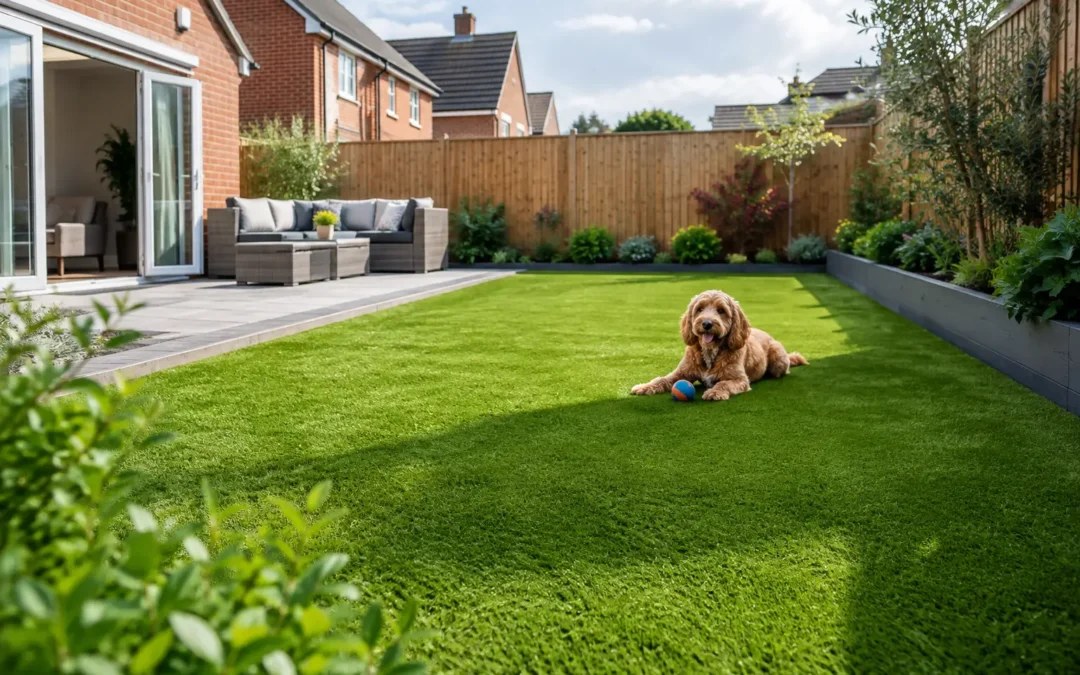
A lawn can look fine from the kitchen window, yet be a constant frustration at ground level. Mud by the back door, bare patches beneath trees, moss that returns each winter and grass that never quite dries out are familiar problems in many local gardens. Fake artificial grass installation in Nottingham is often the practical answer, but the quality of the work below the surface matters just as much as the grass you see.
At Fabgrass, we regularly meet homeowners who have spent years re-seeding, re-turfing or working around a lawn that simply will not cope with family life, dogs or shade. Artificial grass can make a garden easier to enjoy all year, with no mowing, no weeding and far less mud. It is not completely maintenance-free, but when it is properly specified and installed, it can be a very reliable, tidy surface for everyday use.
Why professional artificial grass installation matters
Artificial grass is only as good as its base. Laying a roll of grass over uneven soil, old turf or a poorly drained area may look acceptable for a short while, but problems tend to show themselves later. The surface can dip, edges can lift and water may sit beneath the grass rather than draining away.
A professional installation begins with an honest look at the existing garden. Some lawns need a straightforward dig-out and new base. Others need extra attention because of clay soil, poor falls, tree roots, existing paving levels or water collecting near the house. There is no one-depth-fits-all approach, which is why a site survey is useful before choosing a product or agreeing a price.
The aim is a firm, level and free-draining foundation that supports the grass properly. This is particularly important in Nottinghamshire and Derbyshire gardens, where ground conditions can vary considerably from one street to the next.
What happens during fake artificial grass installation in Nottingham?
A good installation is a sequence of carefully completed stages, not simply a grass-fitting job. The exact method depends on the site, but the work normally starts by removing the existing turf, soil and any unsuitable material to create the required depth.
The ground is then shaped to support drainage and a compacted Type 1 roadstone sub-base is installed where needed. This gives the area strength and helps avoid movement underfoot. A suitable finishing layer is added and levelled before the grass is fitted. A weed membrane helps reduce weed growth coming through from below, although it does not stop windblown seeds settling on the surface over time.
Once the base is ready, the artificial grass is measured, cut and joined with care. This is where experience makes a visible difference. Pile direction, joins, edges around fences and paving, and the position of any access covers all need planning so the finished lawn looks natural and neat rather than pieced together.
Finally, the grass is secured around the perimeter and brushed so the pile sits correctly. Waste removal should be part of the conversation from the start, especially where a garden needs substantial excavation.
Drainage is not an optional extra
Many people enquire about artificial grass because their natural lawn holds water. The grass itself has drainage holes, but that does not solve a drainage issue if the ground beneath it has not been prepared correctly. Water still needs a sensible route through the base and away from the surface.
If a garden has a persistent drainage problem, the right solution may involve adjusting levels or considering additional drainage work. It depends on the cause, the surrounding ground and where the water can safely go. A reputable installer should explain this clearly rather than promising that any artificial grass will cure every wet garden.
Choosing grass for your household, not just the showroom
Artificial grass comes in different pile heights, colours and densities. A very soft, long-pile option may suit a decorative garden where appearance is the priority. For a busy family lawn, a shorter or medium pile can be more practical because it is easier to brush and tends to stand up well to regular use.
The best choice is not necessarily the most expensive one. It is the one that suits how you use the space. A compact garden used mainly by adults may need something different from a lawn where children play football, garden furniture is moved regularly and people walk in and out every day.
Seeing samples at home is genuinely helpful. Light, surrounding brickwork, patio colour and the size of the area all affect how a grass will look. A sample also lets you feel the pile and compare options without having to make a decision from a photograph.
Artificial grass for dogs
For dog owners, the appeal is easy to understand: fewer muddy paws, a lawn that does not turn into a worn track and a surface where solid waste is simple to pick up. However, the grass and the installation both need to be right for the number and size of dogs using the garden.
Good drainage is central. Urine needs to pass through the grass and base rather than remain close to the surface. Choosing a suitable, permeable grass and ensuring the foundation drains well can make day-to-day cleaning much easier. A dense, luxurious-looking grass is not always the most sensible choice for a heavily used dog garden.
Artificial grass still needs regular care. Solid waste should be removed promptly, and the area should be rinsed as needed, particularly during dry weather or if several dogs use a smaller space. Brushing the pile occasionally helps keep it looking tidy. If odour has become a concern in an existing artificial lawn, it is worth looking at the drainage and cleaning routine rather than assuming the grass itself is at fault.
The benefits homeowners notice most
The first benefit is usually a garden that feels usable again. Children can play outside without bringing half the lawn back into the house, and dogs have a cleaner place to go after rain. For homeowners who find mowing difficult or simply do not want to spend weekends maintaining turf, the reduction in routine work is a major advantage.
Artificial grass can also help in gardens where natural grass struggles. Deep shade, heavy foot traffic, moss and poor soil can make a conventional lawn patchy despite repeated effort. A well-prepared artificial lawn gives a consistent finish across the area, including spots where turf has repeatedly failed.
There are trade-offs to consider. Artificial grass can become warmer than natural grass in strong summer sun, and it will need occasional brushing and cleaning. It is also important to keep barbecue embers, hot objects and harsh chemicals away from the surface. The right choice comes from weighing those practical points against how much you value a cleaner, lower-maintenance lawn.
Questions to ask before accepting a quote
A clear quote should tell you what preparation is included, not just name the grass product. Ask how much excavation is allowed for, whether existing turf and waste will be removed, what sub-base will be installed and how drainage will be addressed. It is also sensible to ask how edges and joins will be finished, especially around patios, fencing, flower beds and awkward shapes.
Be wary of comparing prices on grass alone. Two quotes can use similar-looking products but allow very different levels of groundwork. The preparation is the part you may not see afterwards, yet it has a major bearing on how level, stable and long-lasting the lawn will be.
A home visit also gives you the chance to discuss the way you actually live in the garden. Mention dogs, children, shaded areas, access restrictions and any places that regularly hold water. These details help an installer recommend a sensible option rather than a generic solution.
A straightforward local approach
Fabgrass has spent 12 years fitting artificial grass for homeowners across Nottinghamshire, Derbyshire and nearby areas. The service starts with a free consultation and home survey, followed by clear advice, samples and a quote based on the work your garden needs. The focus is on fitting the right grass over the right base, rather than pushing a product that does not suit the job.
If you are tired of mud, patchy turf or a lawn that demands more time than you can give it, arrange a visit and see the samples in your own garden. A good artificial lawn should make the outdoor space easier to use, while still feeling like a proper part of your home.

