
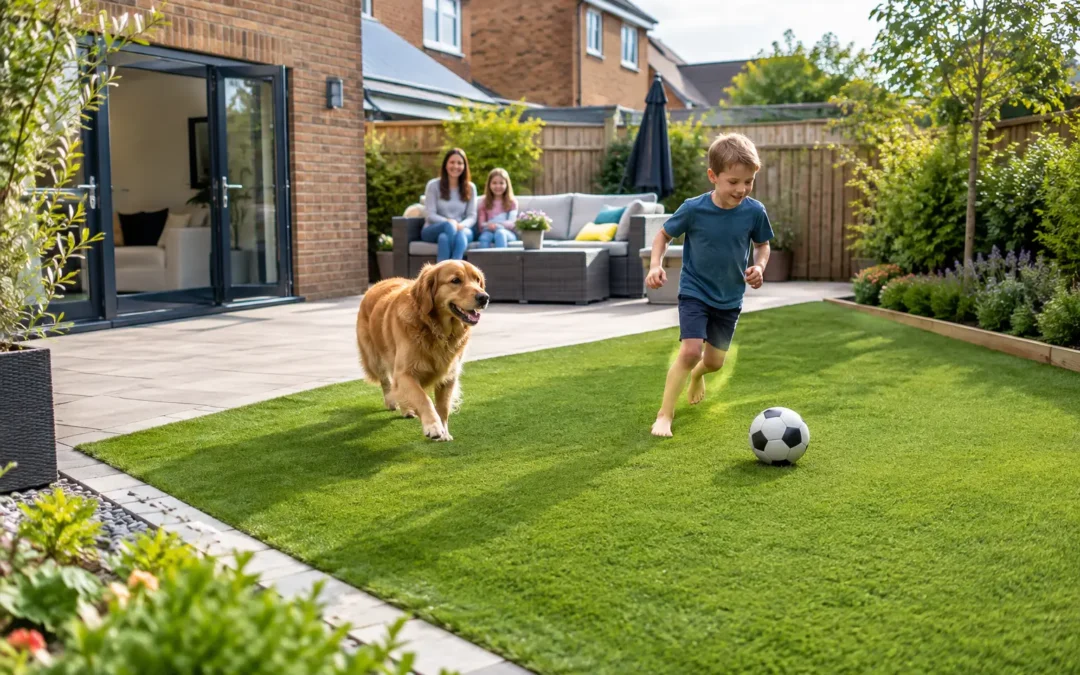
A front garden has a hard job to do. It needs to look tidy from the road, cope with people coming and going, and often grow where natural turf gets very little help from the sun. If you are deciding on the best grass for front gardens, the right answer is usually the one that suits how you actually use the space – not simply the greenest-looking option on a sample board.
For many homeowners, artificial grass is a practical choice for a front lawn that has become patchy, muddy or full of moss. It gives a neat, consistent finish without the weekly mowing, regular weeding and repeated attempts to revive worn-out turf. However, pile height, drainage and proper preparation all matter just as much as the appearance of the grass itself.
What makes the best grass for front gardens?
Front gardens tend to have different pressures from back gardens. Paths, driveways and gates concentrate foot traffic in small areas. Houses, trees and boundary fences can create shade for most of the day. In many Nottinghamshire and Derbyshire gardens, the soil may also hold water through wetter months, leaving natural grass thin and muddy.
A good front lawn should therefore look natural, stay presentable through the seasons and stand up to everyday use. It should also suit the scale of the garden. A small, smart frontage can be overwhelmed by grass that is too long or overly lush, while a larger open lawn may benefit from a fuller, softer-looking product.
Artificial grass is not entirely maintenance-free, but it removes the jobs most people are tired of: mowing, feeding, reseeding and dealing with muddy bare patches. Occasional brushing, clearing leaves and rinsing when needed will help keep it looking its best.
Choosing the right pile height
Pile height is one of the first things to consider, but longer does not automatically mean better. The most suitable pile is usually one that looks in proportion with the house and can cope with the way the front garden is used.
Shorter pile for neat, practical front lawns
A shorter pile often works well beside driveways, paths and entrances. It gives a clean, freshly cut appearance and is easier to brush after leaves or debris have collected. It can be a sensible option for smaller front gardens, where a tidy finish matters more than creating a soft, lawn-like feel underfoot.
Shorter grass can also be better around features such as stepping stones, pots and edging, as it keeps the overall design crisp. If cars regularly pull onto part of the lawn, though, no artificial grass should be treated as a substitute for a properly built parking surface. Repeated vehicle weight can affect the ground beneath it.
Mid-length pile for a natural everyday look
For many homes, a mid-length artificial grass is the best balance. It has enough texture to look convincing from the pavement and feels comfortable underfoot, without appearing too long or needing as much brushing as a deeper pile.
This is often the right choice where the front garden is visible from the living room, used by children on the way in and out, or simply needs to look good with minimal fuss. Different shades and yarn shapes can make a real difference, so it is worth seeing samples outdoors rather than choosing from a photograph.
Longer pile for a softer, more luxurious finish
A longer pile can look attractive in a spacious front garden with a more relaxed design. It creates a softer appearance and can work well where the lawn is mainly for decoration rather than regular footfall.
The trade-off is that longer fibres may need brushing more often, especially in the areas people walk across repeatedly. For a narrow route from the gate to the front door, a mid-length product is often the more practical choice.
Shade, moss and poor natural turf
Shade is one of the main reasons homeowners look beyond natural grass. North-facing gardens, spaces beneath mature trees and lawns enclosed by high fences can struggle to dry out. Grass grows slowly, moss spreads and the surface can become slippery or worn during winter.
Artificial grass will not need sunlight to stay green, which makes it particularly useful in these difficult areas. That does not mean the ground underneath can be ignored. If the garden holds water, has uneven levels or drains towards the house, those issues need to be assessed before any grass is fitted.
Correct preparation is what separates a lawn that looks good for years from one that develops dips, movement or drainage problems. Existing turf and unsuitable material may need to be removed, followed by a properly compacted Type 1 roadstone sub-base, a suitable finishing layer and weed membrane. The finished lawn should be level, secure and planned with drainage in mind.
Front garden drainage matters more than people think
A neat lawn can quickly lose its appeal if rainwater sits on the surface or runs towards the property. Artificial grass has drainage holes, but water still needs somewhere to go once it passes through the backing. The condition and makeup of the ground below are therefore crucial.
A professional survey helps identify whether a standard permeable installation is suitable or whether additional drainage work needs considering. This is especially relevant for gardens with heavy clay soil, low spots or a history of puddling after rain.
It is tempting to focus only on the grass sample, as that is the part you can see. Yet the base beneath it is doing most of the work. Good ground preparation supports the lawn, helps water move through the system and creates the level finish that makes artificial grass look convincing rather than obviously fitted.
A front lawn that works for dogs and families
Even when dogs mainly use the back garden, many households need a front lawn that can handle muddy paws, children crossing it after school and visitors taking a shortcut from the drive. A durable artificial grass with good drainage can make the entrance to the home easier to keep clean.
For dogs that do use the front garden, choose a product suited to regular traffic and ensure the installation is designed for drainage. Solid waste should be removed promptly, and the lawn should be rinsed as needed. With several large dogs or frequent use, it is worth discussing the garden honestly at the survey stage so the grass and base can be specified appropriately.
Artificial grass can reduce the mud brought indoors, but hygiene still relies on sensible cleaning. A well-prepared surface and an appropriate grass choice make that routine far easier than dealing with churned-up natural turf.
Think about the whole frontage, not just the lawn
The most successful front gardens usually combine artificial grass with practical edges and pathways. Porcelain paving, a clear route to the door, planted borders or decorative stone can prevent the lawn from feeling like one large green rectangle. They also direct foot traffic where it belongs.
This is useful when the space is small. A carefully shaped lawn with a paved path often looks more considered and provides a cleaner entrance than grass running right up to every boundary. Edging also helps keep the grass securely fixed and gives the installation a smart finish.
Before choosing a colour or pile height, look at the brickwork, driveway, fencing and any existing paving. A grass sample that looks right in isolation can appear very different next to warm-toned stone or a shaded wall. Seeing samples at home gives you a much better idea of the finished result.
Why a site visit is worth having
Every front garden has its own levels, access points and drainage conditions. A photograph can show the general look of a space, but it cannot reveal whether the ground is soft, where water collects or how much excavation is required for a lasting installation.
At Fabgrass, we arrange a free home consultation so you can compare samples, discuss how the garden is used and receive advice based on the actual site. That may mean recommending a practical mid-length grass rather than the most expensive option, or explaining when drainage work should come first.
The best front lawn is one that still looks neat after a wet week, a busy school run and months of everyday use. Choose a grass that suits your home, make sure the preparation is not cut short, and you will have a front garden that is easier to enjoy each time you come home.

