
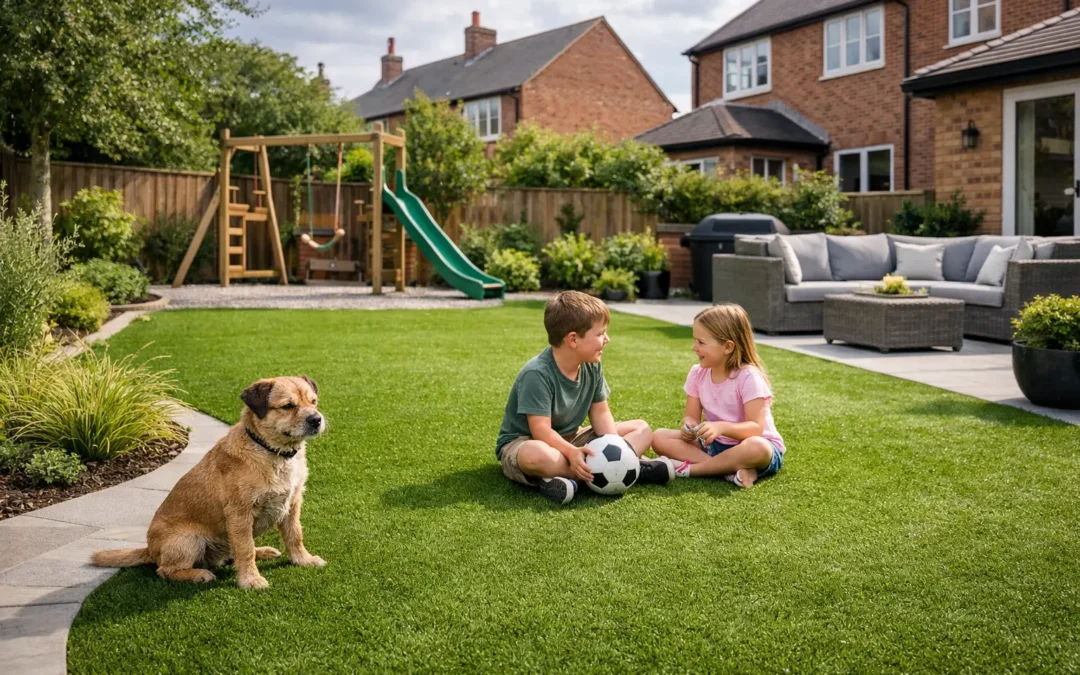
A lawn that turns to mud after a wet weekend is not much use to a family, a dog or anyone who simply wants to step outside without bringing dirt back through the house. For many homeowners, artificial grass Nottinghamshire installations offer a practical answer to worn turf, mossy patches, poor drainage and the regular cycle of mowing, feeding and re-turfing.
The right artificial lawn can give you a neat, usable garden through every season. But the grass itself is only part of the job. The condition of the ground underneath, how water is managed and the way the lawn is fitted will have just as much effect on the finished result.
When artificial grass makes sense
Artificial grass is not automatically the best choice for every garden. A healthy natural lawn can be a lovely feature, particularly where it gets plenty of sunlight and is not under constant pressure from children, pets or footfall. It does, however, need ongoing work and can struggle in the shaded, damp or heavily used parts of many Nottinghamshire gardens.
It is often a sensible option where a lawn never quite recovers. Perhaps large trees keep the garden in shade, leaving moss and thin grass. Perhaps the children have worn a route between the patio and trampoline. Or perhaps dogs regularly bring muddy paws indoors after rain. In these situations, a properly installed artificial lawn creates a clean, level surface that is much easier to live with.
It also suits homeowners who want their garden to look cared for but would rather spend their weekend using it than mowing it. There is no cutting, watering or weeding of the lawn itself, although artificial grass still benefits from occasional brushing, clearing leaves and rinsing when needed.
Artificial grass in Nottinghamshire starts below the surface
A convincing, long-lasting finish depends on preparation. Laying grass over uneven soil, old turf or a soft base may look acceptable for a short time, but it can lead to dips, movement and drainage problems later on.
A professional installation normally begins with assessing the garden properly. The amount of excavation needed depends on the existing levels, access, soil conditions and how the garden meets patios, paths, fences and drainage points. Existing turf and waste are removed, then the ground is prepared with a stable Type 1 roadstone sub-base, compacted to form a firm foundation.
A weed membrane is fitted to help limit growth from below, followed by suitable finishing layers to create a smooth surface ready for the grass. The lawn is then carefully cut, joined and secured, with attention paid to edges and the direction of the pile. These details are what make a garden look tidy rather than simply covered over.
Drainage needs an honest assessment
Artificial grass has drainage holes, but those holes cannot solve every underlying issue by themselves. If water already sits in the garden because the ground is poorly graded, compacted or naturally wet, that needs to be considered as part of the design.
In some gardens, a well-prepared permeable base is enough to allow water to drain through naturally. Others may need additional drainage measures, especially if there is a known problem area or the garden is very flat. A site survey is useful because it allows the installer to assess the actual ground conditions rather than guess from photographs.
This is particularly relevant around Nottinghamshire and Derbyshire, where gardens can vary widely from one street to the next. A free home visit should include measuring, checking access and discussing any drainage concerns before a quote is prepared.
Choosing grass for how your garden is used
There is no single artificial grass that suits every household. Pile height, density, softness and durability all affect how a lawn looks and performs. A thick, luxurious style may be appealing for a front garden or a lightly used space, while a more resilient product is often better for a busy family garden.
Physical samples make the decision much easier. You can see the colour in your own light, feel the pile underfoot and compare different options alongside your patio, fencing and planting. This is more useful than choosing solely from an online image, which may not show the texture or shade accurately.
For gardens used by children, the priority is usually a comfortable, hard-wearing surface with solid preparation underneath. For high-traffic areas, it is worth choosing a product that will stand up well to regular use and brushing. If appearance is the main focus, a fuller pile may suit the space, provided it matches how the garden will actually be used.
Artificial grass for dogs
Dog owners are often looking for two things: less mud and a garden that is straightforward to keep clean. Artificial grass can help with both, but the product and installation need to suit the number, size and habits of the dogs using it.
Good drainage is essential. Dog urine needs to pass through the grass and base rather than sit on the surface, so the preparation beneath the lawn matters as much as the grass chosen. A suitable dog-friendly grass should be durable, permeable and easy to rinse. Regular removal of solid waste, a rinse with clean water and occasional brushing are sensible parts of looking after it.
No artificial lawn is completely odour-free or maintenance-free, particularly in a small garden used frequently by several dogs. If odour becomes an issue, prompt cleaning and an appropriate pet-safe artificial grass cleaner can help. During a survey, it is worth being clear about how many dogs use the space and whether they tend to use one particular area. Honest information leads to a more suitable recommendation.
What to expect from a professional installation
A good process should feel straightforward. It starts with a conversation about the garden, the problems you want to solve and the finish you have in mind. An in-home survey allows accurate measuring and helps identify practical points such as side access, existing levels, steps, utility covers and disposal of old materials.
You should then receive a clear quotation based on the work required, rather than a vague price per square metre that does not account for preparation. The quote should explain what is included, such as removal of the old lawn, base construction, waste disposal, materials and fitting.
On installation day, the work is usually more involved than homeowners expect because much of it happens beneath the finished surface. A proper base takes time to excavate, level and compact. That is not an area where cutting corners is worthwhile, especially for a garden that needs to cope with regular use and British weather.
At Fabgrass, artificial grass is the main speciality, so advice is based on the practical details that affect domestic gardens: the condition of the soil, drainage, access, pets, children and the look you want to achieve. Samples and a site visit allow you to choose with confidence rather than being pushed towards the most expensive option.
Looking after your new lawn
Artificial grass is low maintenance, not no maintenance. A little routine care keeps it looking better and helps prevent debris building up. Remove fallen leaves and twigs, particularly in autumn, and brush the pile occasionally with a suitable stiff brush to lift areas that receive regular footfall.
Rinsing the lawn can wash away dust, pollen and pet residue. Take care around newly planted borders, as soil from nearby beds can be tracked onto the surface. If you have trees that drop heavy seed pods, berries or sap, clearing them promptly will make cleaning easier.
Avoid placing barbecues, fire pits or other heat sources directly on artificial grass. Very hot items can damage the fibres, as can sparks. Garden furniture is usually fine, but moving it from time to time prevents the same area being flattened for long periods.
Is it worth arranging a survey?
If you are tired of patchy grass, muddy paw prints or a lawn that only looks good for a few weeks each summer, a survey is a useful first step. You can discuss the options, handle real samples and find out what preparation your own garden needs.
The best artificial lawn is not necessarily the softest or the thickest. It is the one chosen for your household and fitted onto a base that gives it the support and drainage it needs. A free, no-pressure quotation gives you the facts to decide whether it is the right change for your garden.

