
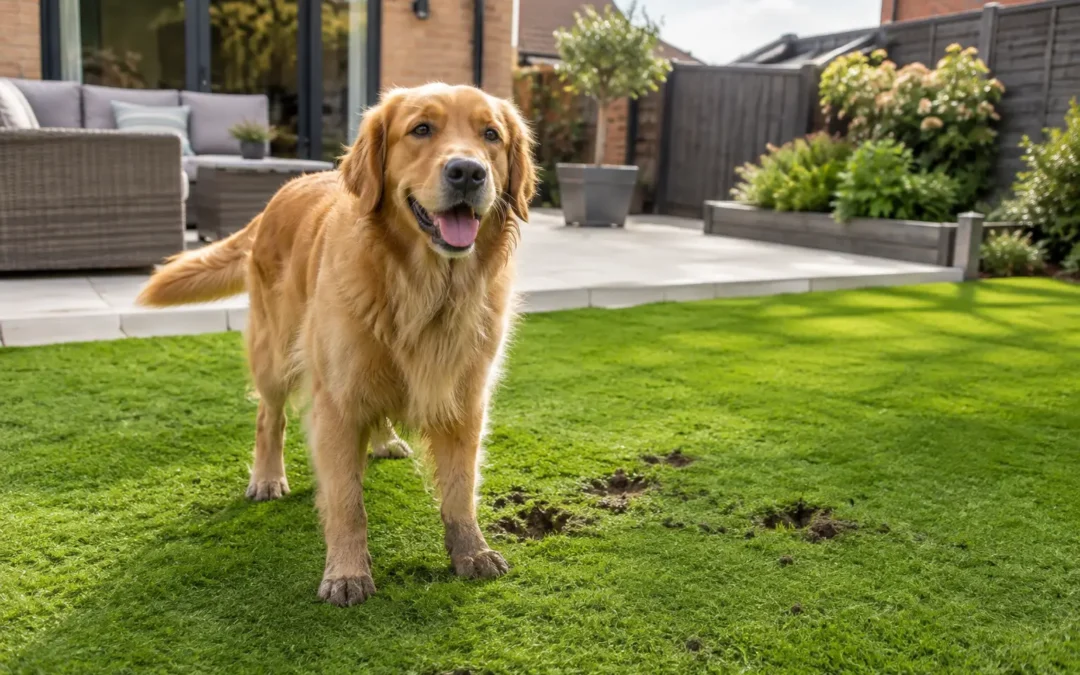
A lawn can look perfectly healthy in spring, then quickly become patchy, muddy and worn once a dog is using it every day. Dogs damage lawns in a few different ways, and it is rarely because an owner has done anything wrong. It is simply the result of regular use, toilet spots and our often wet Midlands weather.
For some households, improving the natural lawn is enough. For others, especially those with larger dogs, more than one dog or a garden that holds water, the same problems return each year. Understanding what is causing the damage makes it much easier to choose a practical solution.
Why dogs damage lawns
Dog urine is one of the most common causes of yellow or brown patches. Urine contains nitrogen and salts. Small amounts of nitrogen can help grass grow, but repeated concentrated amounts in the same area can scorch the turf. You may notice a brown centre with a darker green ring around it, where the surrounding grass has received a more diluted feed.
Female dogs are often associated with more visible patches because they tend to squat in one place. However, male dogs can cause the same issue, particularly if they repeatedly mark the same parts of the garden. The size of the dog, how often they use the lawn and the type of grass all make a difference.
Wear is the other major problem. Dogs commonly run the same route along a fence, chase a ball between two points or wait at the back door. Over time, paws compact the soil and thin out the grass. Once the ground is bare, it becomes muddy very quickly after rain.
Digging can add to the problem, especially with energetic or curious dogs. It is worth remembering that no lawn surface will stop a determined digger without training, supervision or changes to the garden layout. The aim is to choose a surface that copes well with normal everyday use, not to pretend every issue has a simple product-based fix.
The mud cycle is often the real issue
A dog running across a damp lawn does not just bring mud indoors once. Repeated foot traffic compacts the ground, which makes drainage worse. Poor drainage leaves the lawn wet for longer, and wet turf is more easily damaged by paws. That can leave homeowners stuck in a cycle of bare areas, muddy paws and regular attempts to re-seed or re-turf.
Shade can make matters harder. Gardens with mature trees, high fencing or buildings that block sunlight may struggle to grow dense natural grass even without a dog. Moss, weeds and thin turf often become more noticeable through autumn and winter, when dogs still need access to the garden but grass has little chance to recover.
If a lawn only looks tired after an unusually wet spell, there may be scope to improve it with better drainage and a change in how the garden is used. If it is bare in the same places every year, a more durable surface is often worth considering.
Can you keep a natural lawn with dogs?
Yes, in many cases. A natural lawn can work well for a household with one dog and enough space for the grass to recover. It does need realistic expectations and regular care.
Where possible, encourage your dog to use a less visible area for toileting and rinse urine spots with water soon afterwards. This will not remove every mark, but it can dilute the concentration. Rotating play areas, avoiding repeated ball games on one narrow strip and keeping the lawn well aerated can also help.
Reseeding worn areas is best done when conditions suit grass growth, rather than in the middle of a wet, heavily used winter. A hard-wearing lawn seed can improve recovery, but it will still need time without constant use. For busy families, that is often the awkward part: the garden is needed precisely when it is trying to repair itself.
When artificial grass for dogs makes sense
Artificial grass is not the right answer for every garden, but it can be a sensible option where mud, urine patches and worn paths have become an ongoing frustration. It provides an even surface for dogs to use throughout the year, without mowing, weeding or trying to grow grass back in high-traffic spots.
For dog owners, the key benefit is not simply that the grass stays green. It is that solid waste can be picked up easily, liquids can drain through the surface when the groundwork is correct, and there is far less soil for paws to carry into the house.
The quality of the installation matters as much as the grass itself. Laying artificial grass over an uneven, poorly draining base can leave water sitting on the surface, create soft spots and make cleaning more difficult. A garden with dogs needs proper excavation where required, a stable compacted sub-base, suitable finishing layers and a drainage approach that suits the ground conditions.
At Fabgrass, this is why a site visit is useful before recommending a product. A small, shaded garden with two large dogs has very different needs from a larger garden used by a small dog a few times a day. Looking at the access, levels, existing drainage and how the garden is actually used helps avoid choosing grass based on appearance alone.
Choosing the right pile height and feel
Long, soft artificial grass can look luxurious, but it is not automatically the best choice for every dog-owning household. A very long pile may flatten more easily in a busy area and can take more brushing to keep it looking its best. A shorter or mid-pile product is often easier to maintain and can be more practical for regular pet use.
There is a balance to strike. Many homeowners still want a natural-looking lawn that is comfortable for children and pleasant to sit on. Samples are helpful because they let you compare colour, density and feel in your own garden light, rather than choosing from a photograph.
Keeping artificial grass clean with dogs
Artificial grass is low maintenance, not no maintenance. Regular cleaning is what keeps it pleasant to use, particularly if dogs use it as their toilet area.
Pick up solid waste promptly and rinse the affected area with water. This helps move liquids through the grass and into the drainage layers below. During dry weather, an occasional hose-down is often useful across the whole lawn. Leaves, hair and other debris should also be removed, as these can collect on the surface and hold moisture.
If odours develop, use a cleaner made specifically for artificial grass and follow its instructions. Do not rely on heavily perfumed household products, as these may not address the cause and could be unsuitable for the surface. Brushing the pile every so often, especially on favourite running routes, helps keep the grass upright and tidy.
Good drainage is central to hygiene. If urine cannot pass through the surface and base effectively, no amount of cleaning will make the installation perform as it should. That is why the groundwork should never be treated as an optional extra.
Questions to ask before replacing a dog-damaged lawn
Before making a decision, think about the number and size of dogs, whether they use one area repeatedly, how much sun the garden gets and whether water already sits on the lawn after rain. Consider how you use the space too. A garden used for children, dining and entertaining may need a different layout from one that is mainly a practical dog run.
It can also be sensible to retain planted borders or create a separate area for digging and play if your dog enjoys those activities. Artificial grass works best as part of a garden that suits the household, rather than a cover-up for every behavioural or drainage issue.
A proper home survey gives you the chance to discuss these details, see suitable samples and receive clear advice on the preparation needed. If your lawn has become more mud than grass, a friendly conversation with an experienced local installer can help you work out whether improving the turf or changing the surface is the better next step.

