
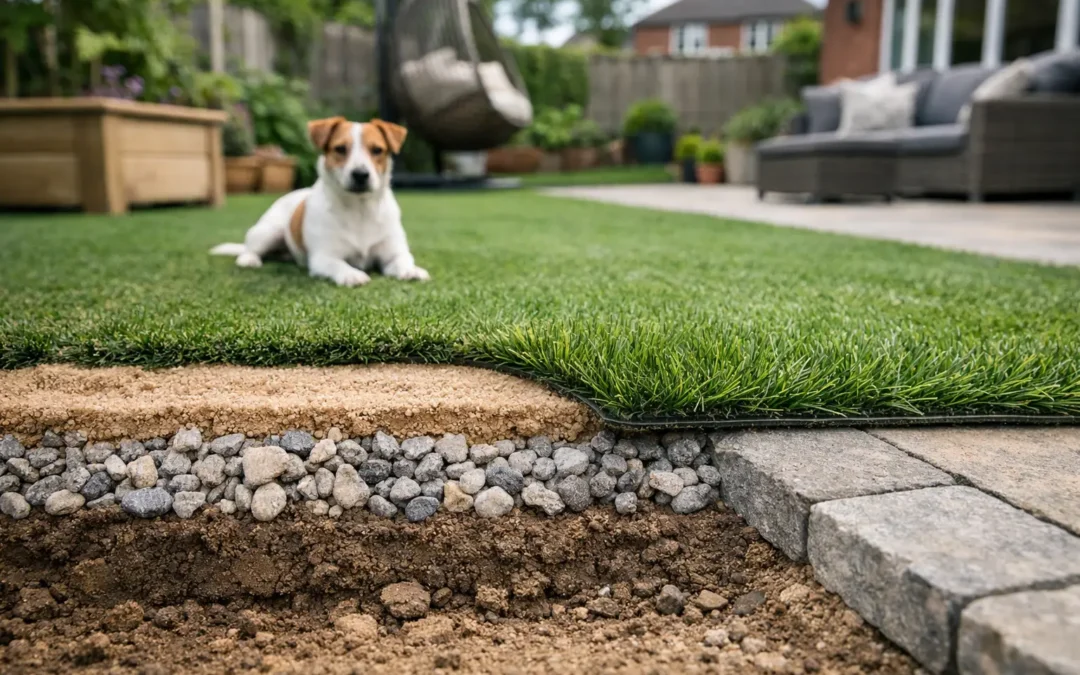
A neat artificial lawn starts well below the grass itself. The artificial grass sub-base is the compacted foundation underneath the finished surface, and it has a major effect on whether your garden stays level, drains properly and feels firm underfoot. It is not the part you see, but it is often the part that determines whether an installation continues to look good after years of family use, dogs and British weather.
For homeowners dealing with muddy turf, worn patches or a lawn that turns boggy after rain, good ground preparation is what makes artificial grass a practical long-term change rather than a short-lived cosmetic fix.
Why the artificial grass sub-base matters
Artificial grass is only as stable as the ground beneath it. Existing soil and turf move, soften and hold water, particularly in gardens with clay ground or areas that receive little sun. Laying grass directly over uneven soil may look acceptable at first, but dips, ridges and poor drainage can soon show through.
A correctly installed sub-base gives the lawn a firm, even platform. It helps spread the weight of foot traffic, garden furniture and children playing, while allowing rainwater to move away through the layers below. It also provides a far better starting point for shaping a gentle fall away from the house, rather than leaving water sitting against patios or door thresholds.
This matters just as much in small gardens as large ones. A compact courtyard lawn can suffer from pooling water and uneven edges if the preparation is rushed. In a larger family garden, weak ground preparation can lead to low spots in the areas used most often.
What goes underneath artificial grass?
Every garden is different, so the depth and detail of the build-up should be based on the ground conditions, access and intended use. However, a professional installation commonly includes several layers, each with a clear job to do.
Excavation and removal of old turf
The process normally begins by removing existing grass, roots, topsoil and unsuitable material. This creates room for the new base without raising the finished lawn too high against paths, paving, fences or damp-proof courses.
The required excavation depth depends on the site. Firm, free-draining ground may need less work than soft, wet or previously disturbed soil. There is no sensible one-size-fits-all depth, which is why a site survey is valuable before providing a final recommendation.
Type 1 roadstone for strength
The main structural layer is usually Type 1 roadstone. This is a graded aggregate that compacts into a solid, stable base. When installed and compacted properly in suitable layers, it prevents the lawn from shifting and reduces the risk of hollows forming later.
Type 1 roadstone is not there simply to make the ground hard. It gives the installation its strength while still allowing water to pass through the construction. The finished surface should feel comfortable to walk on, but it should not feel spongy or unstable beneath the grass.
A fine levelling layer
A finer material is then used above the main sub-base to create a smooth, accurate finish. This layer allows the installer to remove minor imperfections and prepare the correct levels before the grass is fitted.
The aim is not always a perfectly flat garden. In most cases, a subtle gradient is needed to guide surface water away naturally. It should be gentle enough that the lawn looks level to the eye and remains pleasant to use, but effective enough to avoid standing water after rainfall.
Weed membrane
A suitable weed membrane is normally laid as part of the preparation. It helps separate materials and reduces the chance of weeds growing up through the installation. It does not make a garden permanently weed-free, as airborne seeds can still settle on top of the grass, but it is an important part of a tidy, well-prepared base.
Drainage is not an optional extra
Many homeowners choose artificial grass because their natural lawn struggles with poor drainage. The grass itself has drainage holes, but those holes can only do their job if water has somewhere sensible to go underneath.
A well-built artificial grass sub-base is designed to let rainwater pass through rather than collect under the lawn. On gardens with heavy clay, previous flooding issues or a low-lying area, the existing drainage situation needs closer attention. Sometimes the answer is a carefully formed fall; in other gardens, additional drainage measures may be needed. It depends on where the water comes from, where it currently sits and whether there is a suitable route for it to disperse.
This is particularly relevant around Nottinghamshire and Derbyshire, where neighbouring gardens can have very different ground conditions. A garden that looks dry in summer may still hold a great deal of water during wetter months. Looking at the site properly is more useful than guessing from a photograph or selecting a standard installation package.
The right base for dogs and busy families
For dog owners, the quality of the base affects more than appearance. Urine needs to drain through the grass and into the layers below, rather than remaining on the surface. A stable, free-draining base makes routine cleaning easier and helps the garden cope better with regular use.
The best approach depends on the number and size of dogs, how much of the garden they use and whether they tend to use one particular area. A small dog using a large lawn has different demands from several active dogs using a compact garden every day. The choice of grass, drainage and cleaning routine should work together.
Families also benefit from a properly compacted base. It provides a consistent surface for everyday play, garden chairs, paddling pools and walking in and out of the house. Artificial grass does still need basic care, including removing leaves, brushing areas that receive regular footfall and dealing with pet mess promptly, but a good base prevents many of the problems caused by soft, uneven ground.
Can an existing patio or concrete area be used?
Sometimes, but only after checking the condition and drainage of the surface. A sound patio or concrete base can provide a stable starting point, yet it may need cleaning, repairs or levelling work before grass is installed. Most importantly, water must be able to escape. Covering a surface that already puddles will not solve the underlying issue.
If artificial grass is being added alongside porcelain paving or a patio, levels need planning carefully. The grass should sit neatly against the paving without creating a trip edge or trapping water. This is one reason it is worth considering the whole garden layout rather than treating the lawn as an isolated job.
Why rushed preparation causes problems
The temptation with artificial grass is to focus on the colour, pile height and softness of the finished product. Those details matter, but they cannot compensate for poor groundwork. Skipping excavation, using unsuitable fill, failing to compact the base or ignoring drainage can lead to visible joins, sinking areas and water sitting on the lawn.
It is also worth being cautious about simply laying grass over old turf. Organic material breaks down and soil changes with moisture, so the surface beneath is unlikely to remain even. Proper preparation takes more time and creates more waste to remove, but it is the sensible route when you want a lawn that looks tidy beyond the first season.
Getting advice for your own garden
A good installer should explain what is needed for your garden in plain terms, including any challenges they can see before work begins. At Fabgrass, we assess levels, drainage, access and how the lawn will be used before recommending the grass and preparation needed. You can also see samples at home, which makes it easier to choose a pile and finish that suits your family, dogs and garden style.
The best artificial lawns do not rely on a thick pile to hide poor ground. They start with a solid, well-draining foundation, then finish with grass chosen for the way you actually live. If you are tired of muddy feet and patchy turf, a free home visit can give you a clear view of what your garden needs before any work is booked.

